
The Virtual Actor Model: Stateful Distributed Systems Without the Pain
In an era dominated by microservices and serverless functions, one architectural pattern has been quietly gaining production traction among teams building large-scale, stateful systems: virtual actors. Unlike traditional actors that map to physical processes, virtual actors are managed entirely by a runtime — their identity is a string key, their state lives wherever the runtime decides, and they scale transparently across clusters. This post explores how virtual actors work, why they matter in 2026, and how the three major frameworks — Microsoft Orleans, Akka, and Dapr Actors — approach the pattern differently.
Actors vs. Virtual Actors: What's the Difference?
The actor model, introduced by Carl Hewitt in 1973, is a concurrency paradigm where independent entities — actors — communicate solely through asynchronous message passing. Each actor encapsulates its own state and behavior, never sharing mutable data with another actor. The classic implementation binds an actor to a physical process or thread pool on a specific machine.
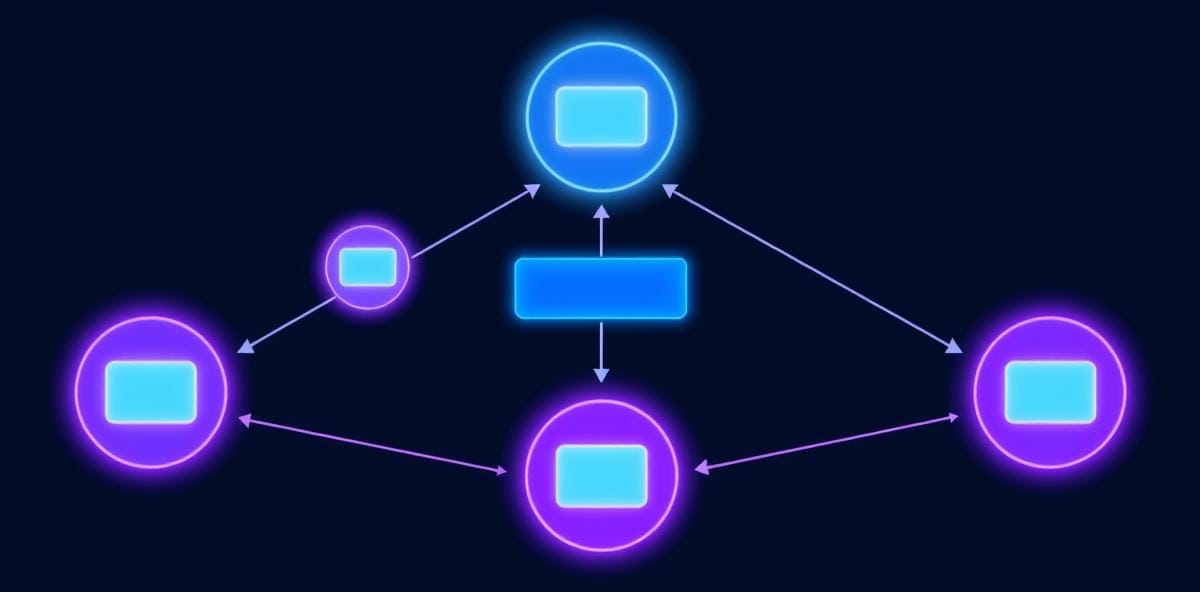
Virtual actors change the binding. Instead of being pinned to a hardware address, a virtual actor is identified by a globally unique string key (like "user:12345"). The runtime handles location transparency: it decides where that actor lives at any given moment, can migrate it across nodes without changing how other code references it, and manages its lifecycle — including automatic deactivation when idle and rehydration when it receives another message.
This is a profound shift in mental model. With traditional actors, you think about process boundaries, serialization across network hops, and explicit deployment topology. With virtual actors, you think about entities — each one representing a user, an order, a game session, a sensor reading — and the runtime takes care of where and how those entities actually execute.
The Three Major Frameworks
Microsoft Orleans
Orleans is arguably the most mature virtual actor implementation. Originally built at Microsoft Research, it was adopted internally by Azure and later open-sourced. It runs on .NET and provides a remarkably simple programming model:
[StorageProvider(ProviderName = "UserStore")]
public class UserGrain : Grain<UserState>, IUserGrain
{
    public async Task<string> GetNameAsync(string userId)
    {
        var state = await this.ReadStateAsync();
        return state.Name;
    }

    public async Task UpdateNameAsync(string newName)
    {
        var state = await this.ReadStateAsync();
        state.Name = newName;
        await this.WriteStateAsync();
    }
}
The framework automatically handles activation, persistence (via pluggable storage providers), clustering, and silo-to-silo communication. Orleans grains are virtual actors — when a grain is idle, its in-memory state can be evicted, and it's reloaded on demand. The programming model feels like writing single-machine code while getting distributed-system semantics for free.
Akka Typed Actors
Akka took a different path. Traditional Akka actors are process-bound, tied to the JVM instance they were created on. With Akka Cluster Sharding, it added virtual-actor-like behavior for stateful entities:
class UserActor extends AbstractBehavior[UserMessage] {
  override def createReceive(): Receive = newReceiveBuilder()
    .onMessage(GetName.class, msg -> Effect().none())
    .build();

  public static Behavior<UserMessage> props(String userId) {
    return AbstractBehavior.create(Context.wrap(
      ActorSystem.create(new UserActor(), "UserSystem")));
  }
}
Akka Cluster Sharding distributes entities across nodes by shard key and rebalances on cluster changes. The trade-off: Akka is closer to traditional actors with sharding layered on top, whereas Orleans treats virtual-actor semantics as the foundational primitive, making Akka more flexible but requiring more configuration.
Dapr Actors
Dapr takes a language-agnostic approach. Its Actor runtime runs as a sidecar, and actors follow a simple interface pattern across Go, Java, Python, .NET, or TypeScript:
class UserActor implements ActorBase {
  async onReminder(name: string, data: Buffer): Promise<void> {
    // Handle reminder tick
  }

  async onTimer(name: string, state: ActorState): Promise<void> {
    // Handle timer callback
  }

  async getName(): Promise<string> {
    const state = await this.state.get('name', 'Unknown');
    return state;
  }

  async setName(name: string): Promise<void> {
    await this.state.set('name', name);
  }
}
Dapr's virtual actors integrate with its broader ecosystem — state management, pub/sub, and service invocation share the same sidecar infrastructure, making it attractive for teams already using Dapr.
When to Choose Virtual Actors Over Other Patterns
Virtual actors excel in specific workload profiles where other patterns struggle:
- Per-entity state at scale. If you have millions of users, each with their own state (settings, preferences, activity), virtual actors map one entity to one actor. No more sharding databases or managing distributed caches for entity-level state.
- Long-lived conversations. Game sessions, chat threads, workflow instances — entities that need to persist across extended periods benefit from the built-in activation/deactivation lifecycle.
- Concurrent access without locking. Since each actor processes one message at a time and never shares state, you eliminate entire classes of race conditions that plague traditional multithreaded architectures.
- Natural boundaries for bounded contexts. In domain-driven design terms, each virtual actor maps cleanly to a bounded context or aggregate root, providing implicit consistency boundaries.
They're less suitable for request-response heavy APIs where low-latency synchronous calls dominate, or for batch processing workloads that don't benefit from persistent entity identity.
Operational Considerations in 2026
The virtual actor landscape has matured significantly. Key operational wins include: built-in observability via OpenTelemetry integration across all three frameworks, state persistence abstraction that decouples your code from any specific database, and graceful degradation when cluster nodes fail — the runtime automatically relocates actors to healthy nodes.
Main trade-offs include a learning curve for teams unfamiliar with message-passing concurrency, limited debugging tooling compared to traditional services, and framework lock-in due to differing activation semantics. However, the productivity gains for stateful workloads are substantial enough that several major organizations have adopted virtual actors as their primary distributed-systems primitive.
The virtual actor model isn't a replacement for microservices or event sourcing — it's a complementary pattern that solves a specific problem elegantly: managing massive numbers of concurrently accessed, long-lived stateful entities. As systems continue to grow in complexity and scale, patterns like virtual actors that abstract away the distributed-systems complexity from developers will only become more valuable.
Comments