
Temporal Workflow Orchestration: Reliable Distributed Systems in 2026
In 2026, developers face a paradox: we can deploy microservices faster than ever, but coordinating them reliably remains one of the hardest problems in software engineering. The Temporal platform has emerged as the de facto standard for building durable, observable, and resilient distributed workflows across services, teams, and cloud providers.
Forget YAML pipelines and brittle cron jobs. Temporal offers something more powerful: durable execution that survives crashes, deployments, and network failures while keeping your business logic written in familiar programming languages like TypeScript, Python, Go, or Java.
The Durable Execution Revolution
Temporal solves the "lost task" problem. When you send an order to a payment service, then a shipping service, then an email notification—what happens if the third service crashes mid-execution? Traditional approaches use retry loops with exponential backoff, complex database state tracking, and manual checkpointing. Temporal eliminates this complexity by design.
Here's the paradigm shift: in Temporal, every workflow execution is automatically durable. If your worker process crashes, restarts, or migrates to another machine, Temporal seamlessly resumes from where it left off—not at the beginning, not at some arbitrary checkpoint, but at the exact step that failed. This is possible because Temporal records every step of execution as an immutable event stream.
// TypeScript: Order processing workflow
export async function processOrderWorkflow(
  orderId: string,
  paymentDetails: PaymentInfo,
  shippingAddress: Address
): Promise<OrderStatus> {
  try {
    // Step 1: Validate payment (durable)
    const paymentResult = await executeActivity(validatePayment, {
      orderId,
      paymentDetails,
    });

    // Step 2: Reserve inventory (durable)
    const inventoryResult = await executeActivity(reserveInventory, {
      orderId,
      quantity: 1,
    });

    // Step 3: Ship order (durable)
    const shippingResult = await executeActivity(shipOrder, {
      orderId,
      shippingAddress,
    });

    // Step 4: Send confirmation (durable)
    await executeActivity(sendConfirmationEmail, {
      orderId,
      customerEmail: paymentDetails.email,
    });

    return OrderStatus.Completed;
  } catch (error) {
    // Automatic compensation: cancel inventory reservation
    await executeActivity(cancelInventoryReservation, { orderId });
    throw error;
  }
}
Choreography vs. Orchestration: Why It Matters
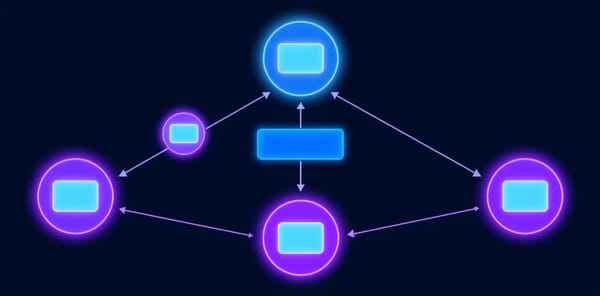
Event-driven architectures often favor choreography—services emit events and other services react. While powerful, choreography creates ambiguity: who coordinates the sequence? What happens when event ordering gets scrambled? How do you trace a complex multi-service transaction?
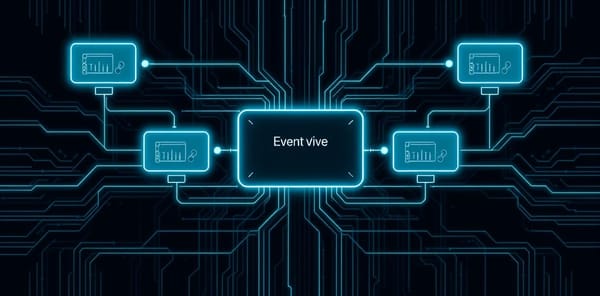
Orchestration with Temporal makes the coordination explicit. The workflow definition is the single source of truth for the entire process. This provides several advantages:
- Debugging visibility: Every execution shows in the UI with complete execution history
- Retries with policy: Configure retry logic per activity—backoff, timeouts, cancellation
- Time travel debugging: Replay past executions with different inputs to diagnose issues
- Human-readable workflows: Business users can understand the workflow definition
Netflix, Uber, and Stripe all use Temporal-style orchestration for critical business logic. In 2026, Temporal Serverless (announced at Replay 2026) has made this accessible to smaller teams with no infrastructure overhead.
Key Patterns in Production
Based on 2026 deployment patterns, these workflow patterns are gaining traction:
- Saga Pattern for distributed transactions: Chain multiple local transactions with automatic compensation on failure. Temporal's error handling makes this nearly trivial to implement.
- Background job with progress tracking: Long-running processes that need to report progress (file conversion, data migration, ML model training). Temporal's workflow signals and queries provide real-time status without database polling.
- Multi-step agent workflows: AI agents that need to call tools, await human approval, then resume. Temporal makes this orchestration reliable without complex state machines.
- Cron with retry guarantees: Replace cron jobs that occasionally fail. Temporal workflows can run daily, retry on failure, and notify humans only after all retries exhausted.
Implementation Considerations
Adopting Temporal in 2026 requires understanding several key concepts:
Workflows vs. Activities: Workflows contain the orchestration logic and run on the Temporal worker. Activities are the actual work units—external API calls, database operations, HTTP requests. Workflows are deterministic (no randomness, no direct time calls), activities can do anything.
Workflow IDs and deduplication: Use meaningful workflow IDs that incorporate business identifiers (order ID, user ID, transaction ID). Temporal automatically deduplicates workflows with the same ID, preventing duplicate processing.
Timeout strategies: Configure start-to-close timeouts for activities and workflows. Temporal will cancel long-running operations and trigger compensation logic. This is how you build systems that self-heal.
Testing workflow logic: Temporal SDKs provide test harnesses that let you unit test workflows without starting a Temporal cluster. Mock activities and assert on the expected execution plan.
The 2026 Production Stack
Modern Temporal deployments in 2026 typically include:
- Temporal Cloud or Temporal Server (self-hosted) as the orchestration backend
- PostgreSQL or MySQL as the persistence layer (Temporal 1.20+ supports these natively)
- Jaeger for distributed tracing integration
- Prometheus + Grafana for observability dashboards
- GitHub Actions for CI/CD pipeline triggers
One notable trend: many teams are integrating Temporal with their LLM-powered developer assistants. The workflow definition serves as executable documentation, and developers ask AI questions like "What happens if the email service fails during order processing?"—the AI answers by tracing through the workflow's retry and compensation logic.
When Not to Use Temporal
Temporal excels at complex, multi-step business processes that require reliability and observability. But it may be overkill for:
- Simple, single-service operations
- High-throughput, low-complexity workloads (consider message queues instead)
- Real-time stream processing (use Apache Kafka or Pulsar)
- Workflows requiring milliseconds-level timing precision
The learning curve is real—you need to think in workflows, activities, signals, and queries. But the payoff in system reliability and developer velocity is substantial.
The Future of Distributed Execution
As we move deeper into 2026, several trends suggest Temporal-style orchestration is becoming foundational infrastructure:
- Serverless orchestration: No more managing Temporal clusters—just deploy workflows as functions
- Language-agnostic workflows: Multi-language workflow composition (TypeScript orchestrating Go activities)
- Human-in-the-loop workflows: Formal support for human approval steps and interactive workflows
- AI-native workflows: Workflows that coordinate multiple AI agents with state management
For teams building critical business systems in 2026, the choice isn't really "orchestration vs. choreography"—it's about which parts need explicit coordination and which can remain loosely coupled. Temporal makes that distinction a design decision, not an accident waiting to happen.
Comments