
Event-Driven Architecture: The Scalable Backbone of Modern Microservices
Every large-scale system eventually faces the same problem: monolithic architectures stop scaling. Teams grow, deployment cycles slow down, and a single service outage takes down the entire platform. The answer that keeps surfacing in 2026 architecture discussions is event-driven design — not as a buzzword, but as a structural necessity for teams shipping at speed.
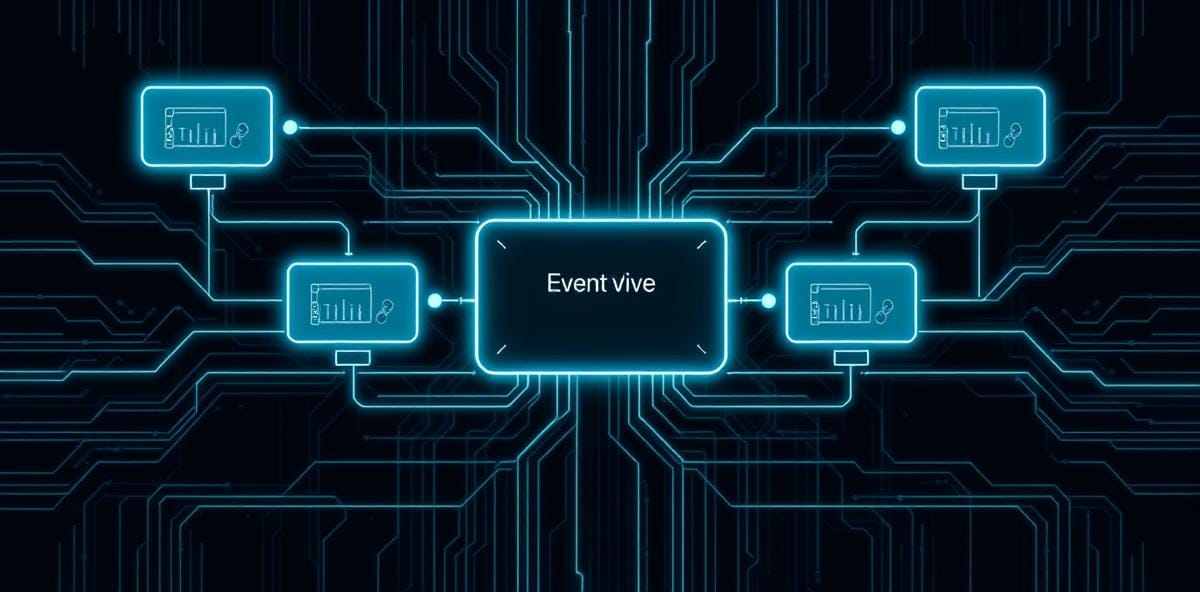
Event-driven architecture (EDA) shifts how services communicate. Instead of tight synchronous coupling where Service A calls Service B and waits for a response, events flow through a message broker or stream. Services publish events they care about producing and subscribe to events they need to react to. This decoupling is what makes horizontal scaling, independent deployment, and fault isolation actually work.
Why EDA Matters Now More Than Ever
The 2026 landscape has three forces pushing teams toward event-driven patterns:
- AI integration at scale. Recommendation engines, chatbots, and predictive analytics all need real-time data pipelines. EDA provides the backbone for streaming data into ML models without blocking user-facing requests.
- Multi-cloud and hybrid deployments. Services spread across AWS Lambda, Azure Functions, and on-prem Kubernetes need a communication layer that transcends infrastructure boundaries. Event streams fill that gap.
- Team autonomy at enterprise scale. Domain-driven design defines bounded contexts, but EDA is how those contexts stay loosely coupled while still coordinating. Each team owns their events; other teams consume them without coordination overhead.
Core Patterns in Production Systems
EDA is not a single pattern — it is a family of patterns that solve different problems at different layers.
Publisher-Subscriber (Pub/Sub)
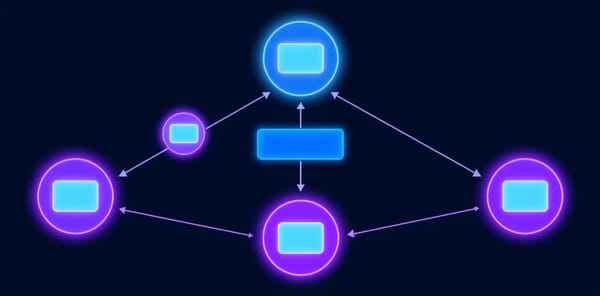
This is the foundational pattern. A publisher emits an event to a topic or channel; all subscribers receive it independently. The classic example is an order placement flow: when an OrderPlaced event fires, the inventory service decrements stock, the email service sends a confirmation, and the analytics service logs the transaction — all without any of those services knowing about each other directly.
Event Sourcing
Rather than storing only the current state of an entity, event sourcing stores every state change as an immutable event. The current state is derived by replaying events. This gives you built-in audit trails, the ability to reconstruct any past state, and natural support for time-travel debugging. The tradeoff is complexity — your event schema must be designed for backward compatibility from day one.
CQRS (Command Query Responsibility Segregation)
CQRS splits write operations (commands) from read operations (queries). Events produced by commands feed into optimized read models. This means your writes go to a normalized transactional store while your reads hit denormalized, query-optimized views. Popular in high-throughput systems where read and write patterns differ significantly.
Sagas
Distributed transactions are the nemesis of microservices. Sagas solve this by breaking a multi-step business transaction into a sequence of local transactions, each with a compensating action. If any step fails, compensating events undo previous steps. Two implementation styles exist: choreography (events trigger the next step) and orchestration (a central coordinator manages the flow). Choreography is simpler; orchestration is easier to debug.
Choosing the Right Event Infrastructure
The plumbing matters as much as the patterns. Here is what production teams are evaluating:
| Technology | Best For | Key Characteristic |
|---|---|---|
| Kafka | High-throughput event streaming | Persistent log-based storage, replay capability |
| RabbitMQ | Complex routing and message queuing | Flexible exchange types, proven reliability |
| AWS EventBridge | Serverless event routing | Native cloud integration, schema registry |
| NATS JetStream | Lightweight pub/sub with persistence | Low latency, small footprint |
| Apache Pulsar | Multi-tenant event streaming | Cloud-native, tiered storage |
The choice depends on throughput requirements, replay needs, operational complexity tolerance, and existing cloud investments. Kafka remains the default for heavy data pipelines; serverless teams gravitate toward managed event bridges.
Pitfalls to Avoid
Even well-designed EDA systems run into trouble when teams ignore these realities:
- Event schema drift. A producer changes an event format without updating consumers. Schema registries with backward compatibility enforcement are mandatory in production environments.
- Duplicate events. Events can arrive more than once. Your consumers must be idempotent — processing the same event twice should produce the same result as processing it once.
- Event storms. A single action triggers cascading events that overwhelm downstream services. Circuit breakers and rate limiting on subscription endpoints prevent this from becoming a denial-of-service scenario.
- Debugging blind spots. When requests span six services through event chains, tracing becomes non-trivial. Correlation IDs carried across every event are the bare minimum for observability.
EDA Meets Serverless
The pairing of event-driven design with serverless functions is one of the most powerful combinations in modern architecture. Serverless functions scale to zero and fire on events — they are essentially event consumers by default. An API Gateway triggers a Lambda on HTTP requests; that Lambda publishes an OrderCreated event; three other Lambdas consume it for separate concerns. The entire system scales independently per function, costs nothing at idle, and deploys without infrastructure management.
The catch is cold starts and execution timeouts. For latency-sensitive paths, keep the hot path synchronous or use provisioned concurrency. Use EDA for everything else — notifications, analytics, caching invalidation, secondary processing.
Getting Started
If your team wants to adopt event-driven patterns without rewriting everything:
- Start with domain events. Identify the core business events in your system — OrderPlaced, PaymentProcessed, UserRegistered. These are low-risk starting points.
- Audit existing integrations. Find synchronous HTTP calls between services that could be replaced by event subscriptions. Each one you convert is a step toward decoupling.
- Implement idempotency first. Before adding complexity, ensure consumers handle duplicates gracefully. This saves months of debugging later.
- Add correlation IDs early. Every event should carry the original request ID. Observability without tracing is just guessing.
Event-driven architecture is not a silver bullet. It adds operational complexity, requires careful schema governance, and demands a shift in how teams think about system boundaries. But for organizations where scaling teams and services independently is a real need — not a hypothetical future problem — EDA is the architectural foundation that makes it all possible.
Comments