
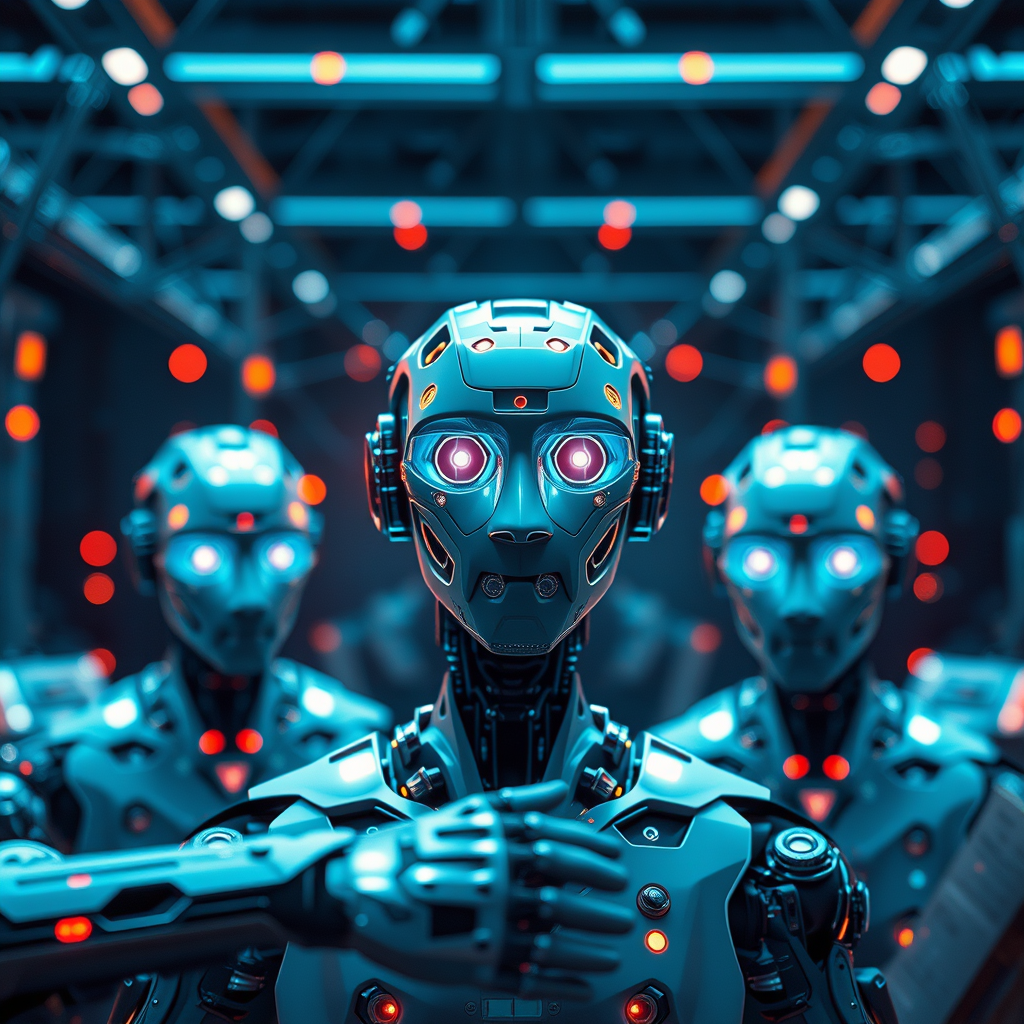
The Future of AI: Orchestration Beats Intelligence in 2026
The Great Agent Shift
We're standing at a pivotal moment in AI development. The days of deploying monolithic, all-purpose agents are over. Instead, the organizations winning in 2026 are those implementing sophisticated orchestration systems that coordinate specialist agents.
Gartner reported a staggering 1,445% surge in multi-agent system inquiries this year alone. The question is no longer can AI do the work—it's whether we can orchestrate it effectively.
The Puppeteer Pattern
Leading companies are adopting what some call the "puppeteer" approach: orchestrators that coordinate specialist agents. Think of it as the distributed version of microservices for AI.
A researcher agent gathers information. A coder agent implements solutions. An analyst agent validates results. Each agent is fine-tuned for specific capabilities rather than being a jack-of-all-trades.
The Challenges of Coordination
This pattern mirrors how human teams operate, but it introduces unprecedented complexity:
- Inter-agent communication protocols: How do agents negotiate? How do they resolve conflicts?
- State management across boundaries: Agents don't share memory by default. How does context travel?
- Parallelization: Running multiple agents simultaneously requires careful task decomposition.
- Conflict resolution: When two agents disagree, who decides?
The Codability Axis
As n8n's blog recently noted, the evaluation metric has shifted from "what can an agent do?" to "how codable is the agent?" The new evaluation points include:
- Routing and branching: Querying the most appropriate specialized agent based on content, intent, or requirements
- Parallelization: Running multiple AI agents simultaneously when tasks are independent
- Orchestrator-workers: Central LLMs dynamically breaking down tasks, delegating to workers, and synthesizing results
Enterprise Control
Deloitte's 2026 AI Agent Orchestration report highlights a critical insight: agent sprawl will increase across programming languages, frameworks, and protocols. Some agents will need multimodal capabilities.
In other words, control is becoming more complex. The future of AI automation belongs to those who can orchestrate—not just those who create individual agents.
Looking Ahead
AI agent orchestration is the infrastructure shift of our time. Just as containerization revolutionized software deployment, orchestration will redefine how we build and deploy AI systems.
The organizations that win in 2026 and beyond won't be the first to build agents—they'll be the first to build systems that keep them working together.
Comments