
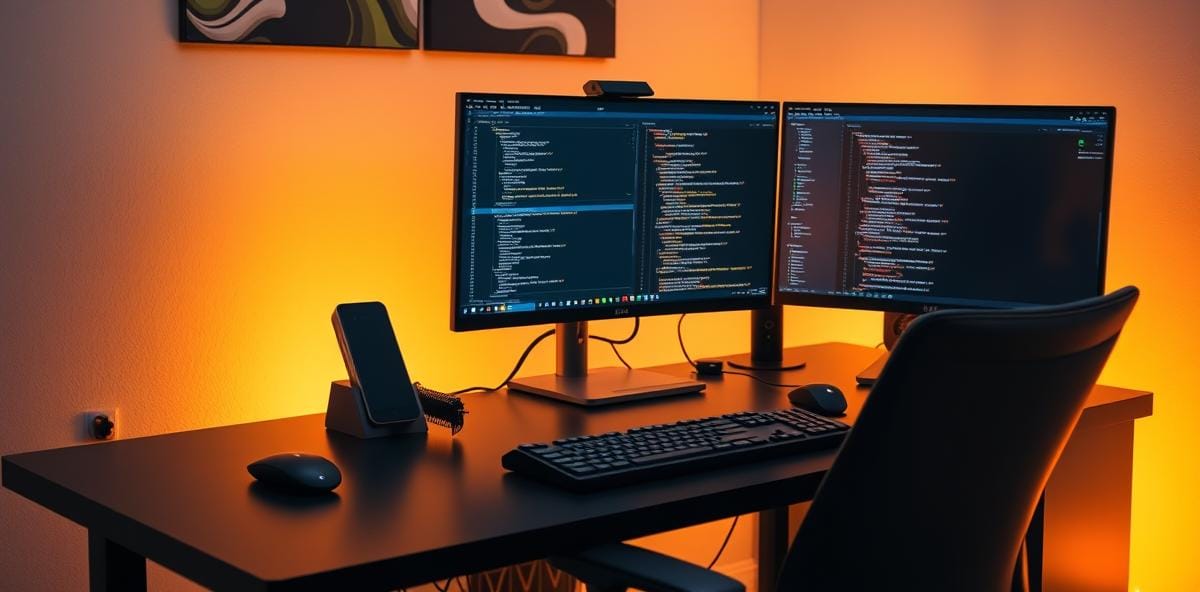
The Local Coding Revolution: Running Qwen3-Coder-Next on Consumer Hardware
For years, developers who wanted cutting-edge AI coding assistance had one option: pay a subscription to access cloud-hosted models. But early 2026 changed everything when Alibaba shipped Qwen3-Coder-Next, an 80-billion-parameter model designed for agentic coding tasks that can now run locally on consumer-grade hardware.
This is not just another incremental release. It represents a fundamental shift in how developers interact with AI-assisted development, and it arrives at a moment when privacy concerns, cost anxiety, and API reliability issues have pushed many teams to seek alternatives.
Why Local Models Matter Now
The cloud-based coding assistant model has served the industry well, but carries inherent limitations. Every request leaves your infrastructure. For organizations handling proprietary codebases, intellectual property concerns are not theoretical.
Beyond privacy, there is cost trajectory. As model capabilities improve, pricing typically follows. Developers who have written thousands of prompts through Claude Code or GitHub Copilot know that usage-based pricing can accumulate quickly on complex projects.
Then there is reliability. API outages, rate limits, and network latency all introduce friction. A local model eliminates these concerns entirely — once set up, it works offline at your own speed.
What Makes Qwen3-Coder-Next Different
The key achievement of Qwen3-Coder-Next is not raw parameter count. Many open-source models have surpassed 80 billion parameters before. What distinguishes this release is the combination of three factors: coding-specific training data, architectural efficiency gains, and quantization support that makes deployment practical.
The quantization support is critical. Through techniques like 4-bit and 8-bit QLoRA quantization, an 80-billion-parameter model that would normally require 160 GB of VRAM can be compressed to run on a single consumer GPU with 24 GB of memory. This brings what was once data-center territory into the reach of individual developers and small teams.
Hardware Requirements in Practice
Running Qwen3-Coder-Next locally does not require a supercomputer, but it does demand some real hardware investment. Here is what the practical setup looks like:
- Minimum viable setup: A GPU with 24 GB VRAM (RTX 4090 or used RTX 3090), 64 GB system RAM, and fast NVMe SSD. This supports 4-bit quantization with acceptable speeds.
- Comfortable setup: Dual GPUs with combined 48 GB VRAM (two RTX 4090s or an A6000), 128 GB system RAM, and PCIe 4.0 storage for higher quality output.
- Cloud alternative: Renting a single GPU on RunPod or Lambda Labs costs roughly $1 to $3 per hour, cheaper than subscriptions for heavy users.
The total upfront cost for a minimum viable local setup sits around $1,600 to $2,000. When amortized over two years of daily use, the per-month cost drops below that of most coding assistant subscriptions — and there are no usage limits or subscription renewals.
Software Stack for Deployment
The ecosystem around local model deployment has matured significantly. Several tools make running Qwen3-Coder-Next accessible to developers who are not ML specialists:
# Using Ollama for quick local deployment
ollama run qwen3-coder-next:80b

# Using llama.cpp with GGUF quantized weights
./main -m qwen3-coder-next.Q4_K_M.gguf -p "Write a React component that" --n_predict 2048

# Using Text Generation Inference for API-style access
text-generation-inference --model Qwen/Qwen3-Coder-Next --quantize bitsandbytes-nf4
Ollama remains the simplest entry point, requiring only a single command to download and run. For developers who need an HTTP API that their existing tools can connect to, Text Generation Inference (TGI) or vLLM provide production-grade serving with batching, speculative decoding, and continuous batching support.
Practical Developer Workflow
Once deployed, integrating a local coding model into your workflow typically involves one of these patterns:
- Inline completion: Use tools like Continue or CodeGeeX that connect to your local model for autocomplete suggestions within your IDE. The model understands your codebase context and generates completions locally.
- Chat interface: Launch a local chat UI (LM Studio, Open WebUI, or the built-in Ollama web interface) for asking questions, generating boilerplate, and reviewing code architecture decisions.
- Agentic workflows: Connect the model to frameworks like LangChain or CrewAI to build autonomous coding agents that can read files, run tests, and propose fixes across your repository.
The inline completion pattern is particularly compelling because it requires no context switching. Your IDE becomes a window into a private, instant AI assistant that has never sent your code anywhere it should not go.
Caveats and Tradeoffs
No technology is without compromises. Local models currently trail their cloud-hosted counterparts in raw capability for the most complex reasoning tasks. The 80-billion-parameter Qwen3-Coder-Next is impressive, but frontier closed models continue to advance at pace.
Inference speed also depends heavily on your hardware. A 4-bit quantized model on an RTX 4090 might generate tokens at 30 to 50 per second — fast enough for completion and casual interaction, but slower than the instant feedback of cloud APIs during rapid prototyping sessions.
Maintenance is another consideration. Local models require periodic updates as new versions arrive, and your hardware may eventually need upgrading as model sizes grow. Cloud subscriptions abstract all of this away; running locally means you are the operations team.
The Bottom Line
The emergence of capable local coding models like Qwen3-Coder-Next marks a turning point in developer tooling. For privacy-conscious teams, cost-sensitive freelancers, and developers who simply want uninterrupted workflow, local deployment is no longer a niche option reserved for ML researchers.
The technology is good enough today to make a real difference. It is not perfect, and it will continue improving rapidly. But for developers ready to take the leap, the combination of capability, cost control, and data sovereignty makes local AI coding assistants worth serious consideration in 2026.
Running models locally does not require expertise in machine learning anymore — just a willingness to invest in hardware and follow setup guides. The barrier to entry has never been lower.

Comments