
Project Solara ditches apps for agents in keycard-sized devices
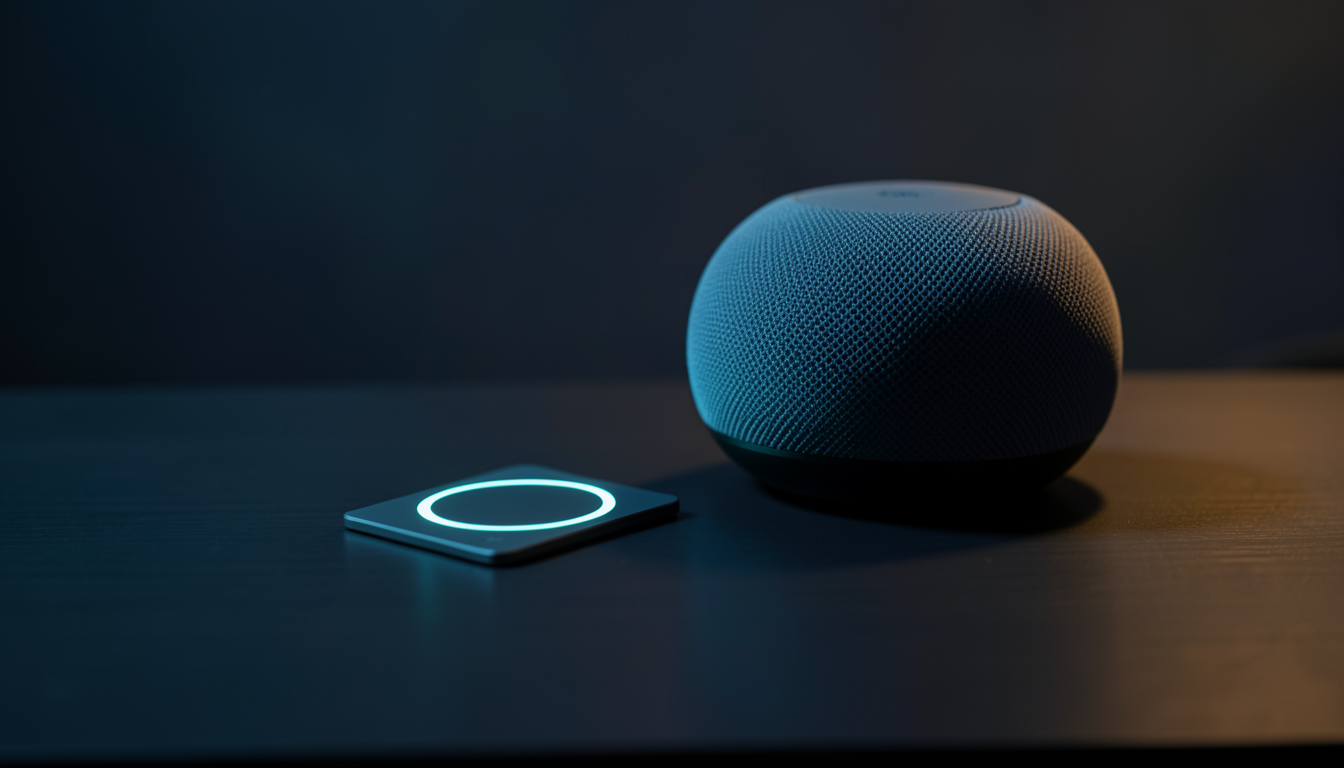
At Build in San Francisco back in early June, Microsoft dropped a name that got less airtime than the hardware on stage: Project Solara. It is a family of device prototypes the size of a smart speaker or an office keycard badge. They have screens. They have microphones. But they do not run an operating system the way your phone does, and they do not run apps. Instead they host AI agents that talk to cloud systems to do specific things, like write up a medical visit while a nurse talks.
That last part is the whole thing. Microsoft is not so much showing off a new gadget as making a new bet on what an operating system is for when the thing doing the work is an agent instead of a human tapping icons.
What Solara is, and what it is not
The prototypes run on chips from Qualcomm and MediaTek, so there is real on-device compute, not just a mic pointed at a speaker. But the silicon is not the point. The point is the software stack above it. A normal smartphone runs an OS that manages apps, and the apps do the work. Solara flips that: the OS exists to host agents, and the agents call out to cloud computing systems to carry out the task.
The medical visit example Microsoft kept using makes that concrete. A nurse is with a patient. A Solara device on the desk listens, and an agent documents the visit and pushes it to the record. No one is opening an app, filling a form, or clicking save. The device is just the front end of a workflow that an agent drives.
It is also worth being clear about what it is not. It is not a shipping product. There is no announced price or date. And it is not a smart speaker with a better chatbot, even though that is the framing everyone reaches for first. A smart speaker still waits for you to ask the right question. Solara's pitch is that the agent is the operator, and the hardware is just a body for it.
Why the form factor is the point
Most of the conversation about agent hardware focuses on the model doing the work. Microsoft's angle is the physical shape. Satya Nadella put it plainly: when new platforms arrive, you get to rewrite the rules of how they operate, and Solara is about giving developers and enterprises the flexibility to imagine the form factors you want and have your agents be ubiquitous.
That is a real point and it usually gets skipped. Right now, agents are bolted onto software that was designed for humans: a chat window, an IDE panel, a tab in a browser. The interface assumes a person is steering. A keycard-sized device assumes the opposite. You clip it to your lanyard or sit it on a counter, and the agent is always there, ambient, ready to act on a task without you summoning it from an app.
The shape also changes what the screen is for. On a phone the screen is the primary interface. On a Solara badge it might be a status light, a glanceable summary, or a way to confirm an action before the agent commits it. The display becomes a control surface rather than a workspace.
Where it sits in Microsoft's stack
Solara did not show up alone, and that matters. The same Build keynote pushed the Surface RTX Spark Dev Box, an Nvidia-chip machine Nadella called a dream machine that ran a 120 billion parameter model most PCs cannot load. There is a new agent called Scout inside Copilot, a reasoning model called MAI Thinking-1 that Microsoft says matches Claude Opus 4.6, and a deal with Mayo Clinic on healthcare AI.
Read together, it is Microsoft trying to own the whole stack: the chips, the OS that hosts the agents, the models, and the cloud systems the agents call. Solara is the layer where Microsoft gets to say the operating system is agent-shaped, which is a position it wants to hold before OpenAI or Anthropic define it. The devices are the argument in that fight.
There is a more mundane read too. Microsoft has been losing the consumer AI conversation, and it is trying to get back to the thing it actually controls: the OS. Windows is still the default on most corporate PCs, and a clean, developer-focused Windows config, shipped to any machine with a single winget command, is the low-risk version of the same idea. Agents on a keycard are the high-risk version.
The skepticism
Here is the part I would watch closely. Solara is a bet that agents are reliable enough to be the thing you point a device at. A lot of that reliability has not been proven yet, and the gap between a demo of documenting a nurse's visit and doing that all day, every day, in a hospital without embarrassing errors is wide. Agents that drive workflows need to be dependable in ways they often are not today.
There is also the privacy question that comes free with a keycard badge that has a microphone and is always listening for tasks. Microsoft will have to answer that in a way that does not scare off the very enterprises it is courting.
So will Solara be a product? Probably not this year, and maybe not as the exact prototypes shown. But the underlying move, an operating system designed around agents instead of apps, is the direction the whole industry is leaning. The keycard badge is the boldest physical expression of that yet. I would watch what Microsoft does with the software stack more than the hardware. The chips and the body are the easy part. The bet is the OS.
Comments