
Otto One Is a $599 N95 Mini-PC, and the Real Product Is the Leash
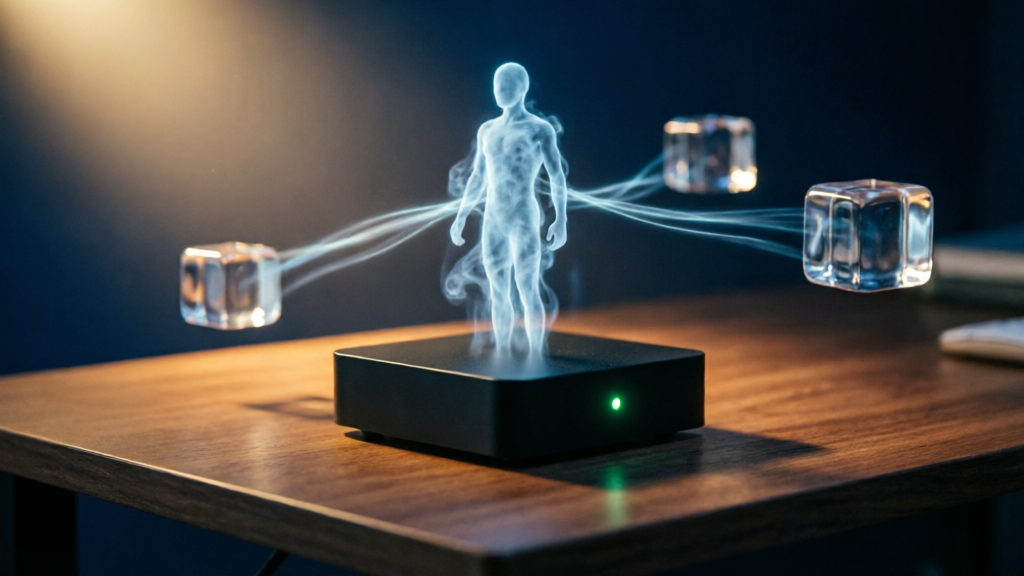
A startup in New York that did not exist in April is now shipping a computer. Otto One, announced November 10 by The Tokenry, Inc. (doing business as Otto), is a screenless box that costs $599 and has exactly one job: being the place your AI agent lives. No monitor, no keyboard, no terminal. You plug it in, tap your phone to it over NFC, and tell an agent to go do something while you close your laptop and walk away.
My first reaction was to look at the spec sheet and laugh. An Intel N95. That is the four-core, up-to-3.4GHz chip that powers a hundred budget mini PCs you can buy for $150. Eight gigabytes of DDR4, a 256GB NVMe drive, fanless passive cooling in a 4.4 x 4.4 x 1.5 inch shell. You have probably built something like this and let it collect dust next to the router.
But the spec sheet is a distraction, and I think Otto knows that. The N95 is not the product. The leash is the product.
What the box actually runs
Otto OS is Debian 13 Linux with three layers on top, and the honest part is that Otto admits the bottom layer is not theirs. The agent harness is OpenClaw, the open-source framework. Their own words on the runtime page: "The harness is OpenClaw. The runtime is otto's." On top of that sits a gateway managing model access, token budgets, and per-agent limits, plus a passkey-style pairing layer. The agent gets a full working environment: a real Chrome browser, a filesystem, system tools, and preconfigured connections to over 2,000 services, including Gmail, Slack, Discord, Notion, and GitHub.
The pricing follows the same logic. $599 for the 8GB config, $799 for 16GB, refundable deposits, flat $15 shipping, 20% off for paying up front. No hardware subscription, the correct call after the Humane AI Pin taught everyone what happens when the servers for your $700 "personal computer" get switched off. Model usage is pay-as-you-go through Otto's credits, or you bring your own Claude or ChatGPT plan or API key, and Otto adds no fee.
And no, it is not a local inference box. Otto's FAQ says so flat out. The thinking happens in the cloud; the box does the doing. If you want on-device models, that is the Otto Pro line on AMD Ryzen AI silicon. Worth noting Otto's own materials disagree on the Pro specs, with the launch release and the hardware page naming different processors and price tiers. A six-month-old company publishing contradictory spec sheets is a data point I would file under "watch this."
The two design choices that matter
First: the agent browses from your house. Because the agent drives Chrome from Otto's own session on your home network, to a website it looks like a person, not a datacenter IP. LinkedIn, Reddit, and Instagram have spent years blocking cloud-hosted bots, which quietly broke half the promises of cloud agent products. An agent that can log in and read your stuff without getting captcha-walled is a materially more capable agent. Nobody in the "just run it on a VPS" crowd wants to admit how much of agent reliability is really IP reputation.
Second: the permission system is treated as the core product, not a settings page. Co-founder Quinn Finney said the quiet part loudly in the launch release: everyone is building agents that can act, nobody is building the part that decides what they are allowed to do, what they can spend, and what needs sign-off. Concretely: three approval modes per agent (Ask, Auto, Full), spending alerts at 75%, 90%, and 100% of a set limit, per-application permissions you revoke from your phone, and pause/stop/delete controls on running tasks. This is the same asks-not-grants direction the Docker Sandbox Kit and Uber's MCP Gateway have been moving in, arriving now in consumer hardware. The dangerous component in an agent system is not the model, it is the credential store.
The security story is architecturally serious, at least on paper. Phone-to-box traffic is end-to-end encrypted with the Signal protocol family (X3DH plus Double Ratchet), Otto's servers relay ciphertext they cannot read, keys are generated on your devices, the drive is unlocked by an internal security chip, and unpairing wipes owner data in one action. Some functions still need their cloud: model calls, signed updates, billing, and hosted integrations where credentials live with the provider.
Why a box, why now
Otto claims 12,500 to 15,000 units presold, and the company was founded in May 2026. That number is a vendor claim, so discount it, but it sits inside a real pattern: Aina launched a $399 AI control ring the same week, Nothing is launching a screenless AI gadget in December, Meta is shipping the Muse Charm pendant, OpenAI already sells a $230 Codex keypad. Everyone is betting that once you run several agents continuously, they deserve their own machine the way a server does.
CEO Jake Trefethen's pitch is the line the whole category is grasping at: "This is the most intimate computer ever built. It holds your credentials, your correspondence, your files, everything you'd hand a chief of staff. Something so personal shouldn't be rented from someone else's data center." I think he is right about the problem and doing something genuinely risky about it. The company holding your Gmail and banking tokens is seven months old, with unaudited hardening on top of OpenClaw, and its first hardware product ships in January. When I imagine the breach headline for this category, this is the company I imagine in it.
Here is the counterweight, and it is the reason the box is more defensible than a Humane pin: the harness underneath is open source. If Otto the company dies, you are not holding a brick. You are holding a fanless Debian box with two HDMI ports, Ethernet, six USB ports, and an agent framework anyone can run. The Rabbit R1 had no such escape hatch.
Who should actually buy one
Not you, if you can already run OpenClaw or any agent stack on a mini PC and enjoy maintaining it. You get the same capability for a third of the price. The buyer is someone who wants an always-on agent with real integrations and approval gates and does not want to live in a terminal, plus anyone who has watched a cloud agent fail a login because it came from an AWS IP.
The $599 is honestly priced for what it is: a $150 commodity box with a control plane you would otherwise have to design yourself, and that control plane (approval modes, spend caps, credential custody, E2E pairing) is the scarce part in 2026. Models are cheap and harnesses are free. Trust infrastructure for a machine that acts on your behalf while you sleep is neither. The trust math does not obviously work out for a company this young. But the bet, that the next category of personal computer is one nobody sits in front of, is the most interesting hardware idea I have seen this fall, and I will be watching January's shipment numbers.


Comments