
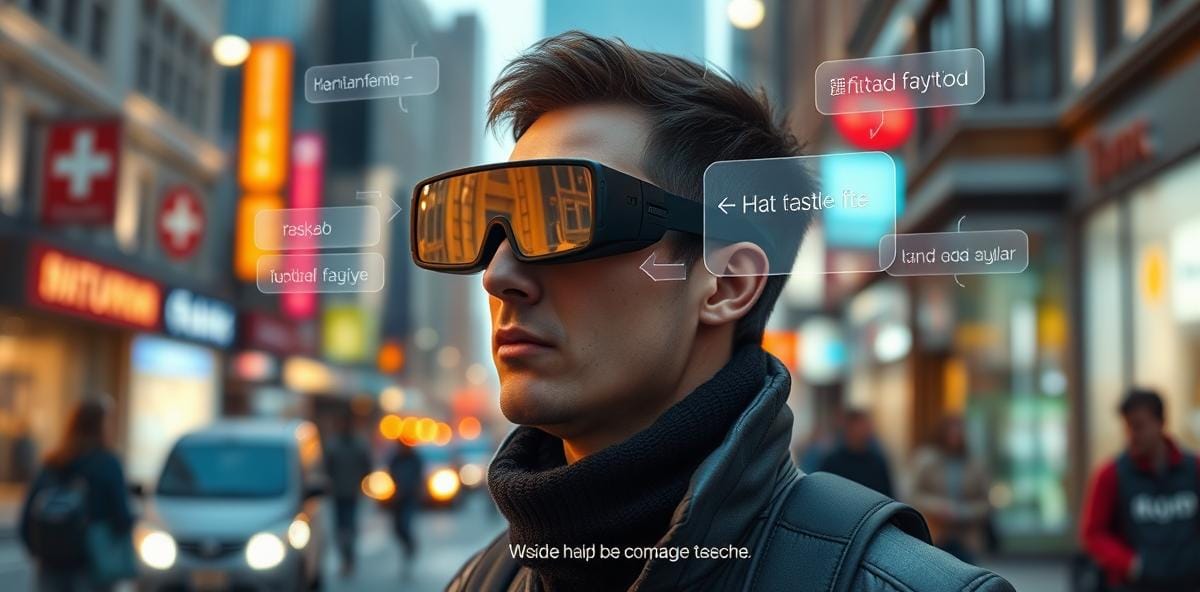
The 2026 Shift: Why AR Glasses Are Finally Killing the Smartphone
By the end of 2026, the smartphone in your pocket will start feeling like a flip phone in 2010 — obsolete, clunky, and strangely nostalgic. The device that will make it happen isn't a foldable phone or a brain implant. It's a pair of everyday-looking augmented reality glasses weighing under 70 grams, delivering all-day battery life, and overlaying digital intelligence directly onto the real world. Live translation in 120+ languages, instant object recognition, contextual navigation floating in your field of view, and AI assistants that see what you see — this is the year AR eyewear crosses the chasm from gimmick to daily essential.
The Tipping Point: What CES 2026 Proved
January 2026 in Las Vegas delivered the clearest signal yet that AR glasses are ready for prime time. The standout devices weren't sci-fi prototypes — they were shipping products you could pre-order immediately. The consensus from the show floor was unanimous: 2026 is the year AR glasses achieve the holy trinity — lightweight enough to wear all day, bright enough for outdoor use, and smart enough to replace your phone for the vast majority of daily tasks.
Qualcomm's Snapdragon AR1 Gen 2 platform solved the power-to-weight equation once and for all, enabling 68-gram frames with micro-OLED waveguides hitting 3,000 nits brightness and an 85-degree field of view. Xreal Air 3 and Rokid Max 2 both announced sub-$499 models with 120 Hz refresh rates, prescription lens inserts, and true all-day battery life spanning 10 to 12 hours of mixed use. Meta demonstrated their Orion successor (codenamed Artemis) with full-color passthrough at 70 degrees FOV in a package that actually looks like Ray-Ban Stories on steroids. And Brilliant Labs' Frame Pro added on-device multimodal AI running a customized Llama 3.2 variant — answering questions about whatever you're looking at, with no phone required.
TCL's RayNeo X3 Pro went viral on social media for its live translation demo: point at any foreign menu, street sign, or conversation and read perfect subtitles floating in mid-air. The signal was unmistakable.
How AR Glasses Will Actually Replace Your Phone
Think about your typical smartphone session. You pull it out, unlock it, open an app, and hold a glowing rectangle 12 inches from your face. In 2026, that same workflow becomes invisible:
- Navigation: Turn-by-turn arrows float over the real street instead of a 2D map.
- Messaging: Replies appear as floating bubbles you can dictate or pinch-to-send while walking.
- Shopping: Look at any product in a store or on the street and see real-time price comparisons and reviews overlaid.
- Social: Your friend's latest content appears as a subtle halo around their face when you meet for coffee.
- Learning & Work: Live translation, real-time subtitles for meetings, and step-by-step repair overlays when fixing something yourself.
Battery anxiety disappears because the glasses sip power — most 2026 models run 10 to 14 hours — and offload heavy tasks to an optional pocket compute puck or directly to 6G edge clouds with sub-10-millisecond latency. The device that used to dominate your attention now works quietly in your periphery.
The Everyday Task Revolution
Here's what actually changes in daily life:
- Morning run: AR glasses overlay your pace, heart rate, and optimal route in your peripheral vision — no phone in hand.
- Cooking a new recipe: Ingredients and steps float next to your cutting board while your hands stay free.
- Traveling abroad: Every sign, menu, and conversation is instantly translated into your native language in real time.
- Attending a conference: Name tags, LinkedIn profiles, and mutual connections appear as you shake hands.
- Robotaxi rides: Navigation, speed limits, and hazard alerts project directly onto your glasses instead of a car screen.
The killer feature is contextual awareness. Your AI companion literally sees what you see and anticipates needs before you ask. Lost in a city? It recognizes landmarks and offers directions before you open a map app. Meeting someone new? Their public profile and mutual interests appear in your vision. The friction between the physical and digital worlds dissolves.
Which AR Glasses to Buy in 2026
The market has matured into clear categories. Here's how to choose based on your priorities:
- Xreal Air 3 — Brightest outdoor display at 3,000 nits, 12-hour battery, best for all-day everyday use.
- Rokid Max 2 — Built-in spatial audio plus prescription-ready frames, 10 to 14-hour battery, ideal for media and entertainment.
- Brilliant Labs Frame Pro — On-device multimodal AI with no phone dependency, 11-hour battery, perfect for developers and privacy-focused users.
- Viture Pro XR — 135-inch virtual workspace with eye tracking, 10-hour battery, aimed at productivity power users.
- RayNeo X3 Pro — Best live translation engine covering 120+ languages, 8-hour battery, the pick for international travelers.
For most buyers in 2026, the recommendation is straightforward: start with the Xreal Air 3 or Brilliant Labs Frame Pro if you want a genuine phone replacement. Add the optional compute puck only if you need heavy AI inference workloads beyond what the glasses handle natively.
The Bigger Picture
For the first time in tech history, 2026 delivers a wearable that is simultaneously more powerful than your current phone and less intrusive than pulling it out of your pocket. No more staring down at screens. No more typing on glass. Just glance, speak, or gesture, and the digital world responds in context.
The smartphone isn't going extinct overnight, but just like the iPod after the iPhone, its days as your primary interface are numbered. In 2026, the screen you look at most won't be in your hand. It will be the world itself, intelligently augmented. The question is no longer whether AR glasses will replace smartphones — it's whether you'll be among the first to make the switch.
Comments