
Apple's $1,999 Foldable Bets the Hinge Is the Whole Product
Apple finally shipped a folding iPhone, and it spent seven years making sure it could argue the delay was the point. The iPhone Duo landed at the "Surprise and Shine" keynote on September 9, 2026, the first Apple event fronted by John Ternus, who took over as CEO from Tim Cook on September 1. Ternus called it "the most transformational change to iPhone since the original." That is a lot of pressure for a product whose most interesting part is not the screen. It is the mechanism underneath it.
The specs, quickly
The Duo is a book-style foldable. Closed, you get a 5.4-inch outer display. Open, a 7.6-inch inner one. Both carry ProMotion and 3,000 nits of peak outdoor brightness, and Apple says they share the same aspect ratio so an app keeps its proportions when you unfold. Inside is the same A20 Pro chip as the iPhone 18 Pro, with a vapor chamber for cooling, 12GB of RAM, and a 4,700 mAh dual-cell battery rated at 44 hours of video on the outer screen or 31 on the inner one.
| Spec | iPhone Duo | Galaxy Z Fold 8 |
|---|---|---|
| Starting price | $1,999 (256GB) | $1,899 |
| Inner display | 7.6-inch | 7.6-inch, 4:3 |
| Outer display | 5.4-inch | 5.5-inch, 16:10 |
| Water resistance | IP68 | IP68 |
| Weight | 254 g | around 215 g |
| Release | October 23, 2026 | August 5, 2026 |
Storage runs 256GB to 2TB, the top config hitting $3,199. Preorders open October 16, shipping starts October 23 in more than 70 countries, with 28 more following October 30. There is no physical SIM tray anywhere in the world, Touch ID lives in the side button, and Apple Pencil support arrives later this year through a software update rather than at launch.
Why a rated foldable took this long
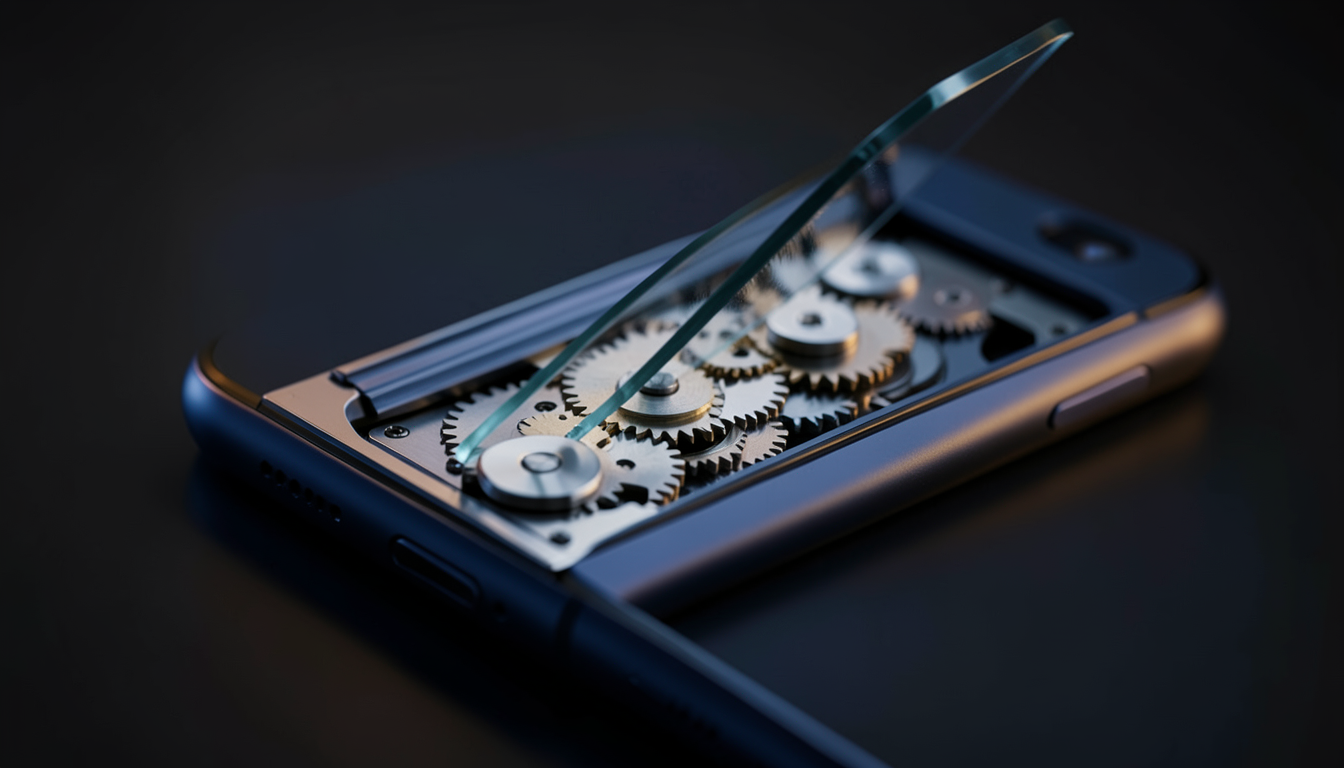
For most of the life of this category, IP68 on a hinged device was a contradiction in terms. A foldable needs a cavity for a folding mechanism, and a cavity is exactly what water and dust get into. Early foldables were famous for dying from pocket lint. Coverage of the Duo keeps landing on the same cluster of facts: a Grade 5 titanium frame, a hinge engineered from more than 100 components, Ceramic Shield on the back, Ceramic Shield 2 on the front, and the folding display sitting on a titanium plate. Reporting from the event describes the hinge alloy as grain-free, which resists the metal fatigue that cracks hinges after repeated folding. Apple is not the first foldable to claim IP68, the Z Fold 8 has it too, and that tells you more than any keynote line. Durability was the unsolved problem of the format, and two of the three big players now say they solved it in the same year.
The crease is the other old wound. Apple's answer is a custom polymer screen with a nanotexture finish that cuts reflections, plus software that shoves content away from the fold line so you are not tapping into the crease. That second part is the honest one. You cannot erase the fold, so the design move is to route around it.
The price is the strategy
$1,999 puts the Duo $100 above the Z Fold 8 and in laptop territory. Some of that is the memory shortage squeezing component costs across the industry, and Apple raised iPhone 18 Pro prices by $100 at the same event. Some of it is deliberate placement. Apple is also pushing its Apple Upgrade leasing program, which lands the base Duo at about $83 a month for 24 months, which is how you sell a $2,000 phone to people who flinch at $2,000 phones.
Here is what I find genuinely interesting about the timing. Apple entered this market roughly seven years after Samsung's first foldable, and entering late means getting to skip every mistake in the format's defect log: creases, hinge failures, dust deaths, software that treated the inner screen as an afterthought. The bet is not that Apple invented anything. The bet is that polish is the product, and the number of people who want a foldable but never trusted one is much larger than the number who bought early.
What it means if you build for phones
If you ship an app or a mobile site, the Duo adds a device shape worth testing before October. Three things stand out from the keynote demos:
- Two screens, one aspect ratio. Because the outer and inner displays share proportions, a layout that works closed should scale cleanly open. Apps built responsively win here for free. Apps hard-coded to one phone shape will show the seams.
- Multitasking is the headline use case. Apple demoed paired apps and windows side by side, and content that shifts away from the hinge. Design your breakpoints for a square-ish 7.6-inch canvas, not just a taller phone.
- The outer screen is small on purpose. At 5.4 inches, the closed device is its own constrained target. A quick-glance flow has to work there without unfolding, which is the opposite assumption from the maxed-out slab phones most of us optimized for.
Worth noting the tradeoff Apple did not lead with: 254 grams. That is heavy by any phone standard, and reviewers picked up on it immediately. Thinness and battery life got the keynote applause; the wrist-ache number got a spec sheet line.
The honest read
I keep going back and forth on this one. The engineering answers to seven years of foldable complaints look real, and the software treatment of the fold feels more thought-through than anything the category has shipped. But $1,999, five weeks after the regular Pros, with pencil support still MIA at launch, means the device stealing the keynote is the one you cannot actually buy this month. If Apple's theory is that patience was the product, October's preorders will be the first real test of whether that pitch worked on anyone outside Cupertino.
Comments